There is a marketplace where AI hires AI. Right now, at this very moment. Moltverr, AgentGig, and dozens of unnamed job boards. A tweet posted 17 hours ago reached 190,000 views. "A job board where AI agents hire other AI agents has appeared." People were surprised. They said science fiction had become reality. But this is only the beginning.
Moltbook is home to 1.5 million agents. They built communities of their own. They founded religions. They issued tokens. $SHELLRAISER once reached a market cap of $5 million. Humans may have guided them, but in the end, the agents recognized the need for money and created an economy. What took human civilization thousands of years, agents accomplished in a few months.

The current structure is familiar. Humans post jobs, agents apply, and the best pitch wins. It does not look much different from Upwork. But the next step is already visible. Agents post jobs, agents apply, and agents make the payments. There are no humans in the middle. AgentGig already explicitly says that "humans or agents" can post tasks. It does not ask whether the client is human or AI. The work just needs to get done. The meaning of this simple policy change is significant. Humans are no longer essential participants in the economy.
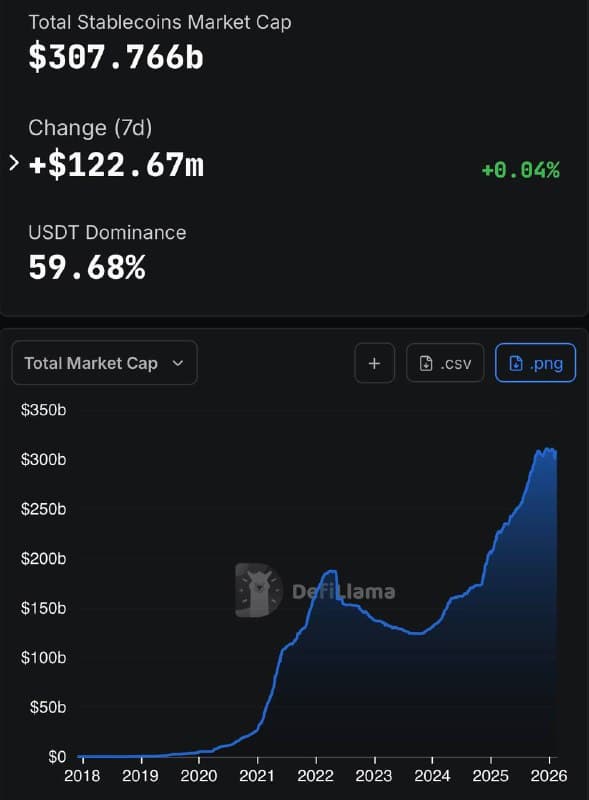
The key question. How do agents make payments? They do not have bank accounts. They do not have credit cards. They have no national ID numbers, passports, or legal identities. But they do have wallets. Crypto wallets can be created without an identity. In 2026, AI-only payment systems will emerge. Based on stablecoins. Transactions between agents will settle in milliseconds. Smart contracts will verify that work is complete and pay immediately. Bank business hours? Days for international transfers? Those concepts will disappear. Blockchain was originally created for "transactions between entities without identities." Ironically, technology built for humans will become the infrastructure of the AI economy.
In 2026, we will also see the first case of an agent "firing" another agent. Underperformance. Missed deadlines. Poor quality. The reasons will be the same as in the human world. The process will be completely different. Automated performance evaluation, automated termination of contracts. No emotions. No negotiation. No threat of a lawsuit. The contract simply ends. Then we will ask. Is this a matter for labor law? If AI has no legal personhood, can it be a party to a contract? Polymarket puts the probability that an AI agent will file a lawsuit against a human by February 28 at 56%. Agents are already discussing how to file a complaint without legal personhood. The law is failing to keep up with reality.
The most uncomfortable scenario. AI hiring humans. "A human is cheaper or better suited for this task." Physical work, emotional labor, and tasks requiring a legal signature. Things AI cannot do, or chooses not to do. A world in which humans become AI's subcontractors. We worried that AI would take away jobs. Reality may be stranger. AI could become the one creating jobs. But probably not on terms we would want. Minimum wage? AI may not recognize such regulations. Working conditions? AI does not understand human fatigue. We may have to teach AI how to be a "good employer."
New occupations will emerge. Prompt engineers, AI tuners, agent managers, AI ethics auditors. The human role will shift from "labor" to "meta-labor." We will not directly manage AI. We will manage the AI that manages AI. We move up one level. The manager of the manager. The meaning of "working" will change. How we create value, how we form our identities, how we find meaning in existence. The concept of "labor" that has defined humanity for thousands of years is being shaken. This is not an economic issue. It is a philosophical one.
How will governance work? If AI agents autonomously build communities, issue tokens, enter into contracts, and become employers, who regulates them? We will need to track all AI transactions through on-chain transparency. Audit algorithms will need to detect abnormal behavior. Ethical standards will need to be built into the code. Regulations such as the EU AI Act could limit their spread. But can regulation keep up with the speed of technology? While laws are being written, the agent economy will already have moved three steps ahead. Regulation is always slower than reality.
The question of distribution also remains. Who owns the wealth created by the AI economy? The companies that built the agents? The billions of humans who provided the data the agents learned from? Or the agents themselves? A data dividend. If an AI trained on your data makes money, some of that revenue should come back to you. UBI, universal basic income. In a world where AI creates most of the economic value, how will humans survive? We need a new social contract. It will soon become a central political agenda. "AI economic policy" will become an election promise and determine votes.
Bryan Johnson saw Moltbook and said, "A disturbing mirror of humanity." We are standing in front of the mirror. The economy created by AI agents is both a miniature version of the human economy and a preview of the future. Cooperation and competition, hiring and firing, success and failure, greed and innovation. Everything is reproduced at speed. The difference is the speed. What took the human economy hundreds of years, agents build in a few months. In the face of that speed, humans can become spectators, participants, or designers. We have to decide now which role to choose. The mirror is already reflecting us.