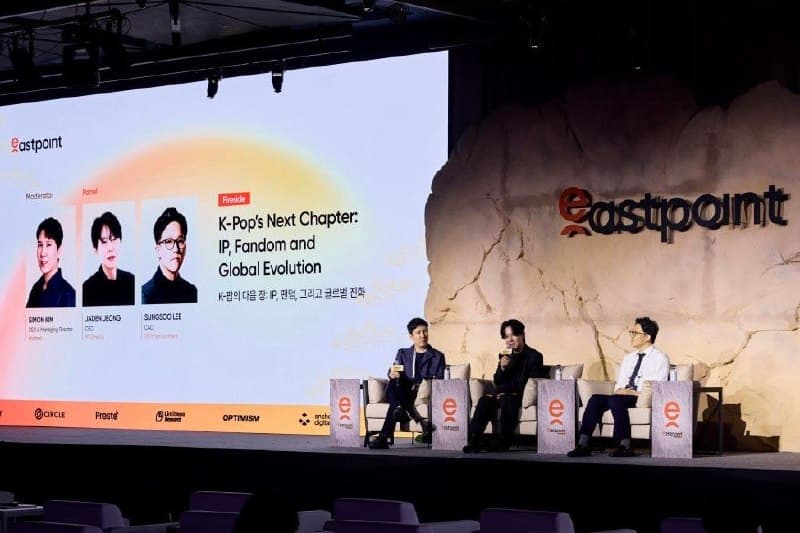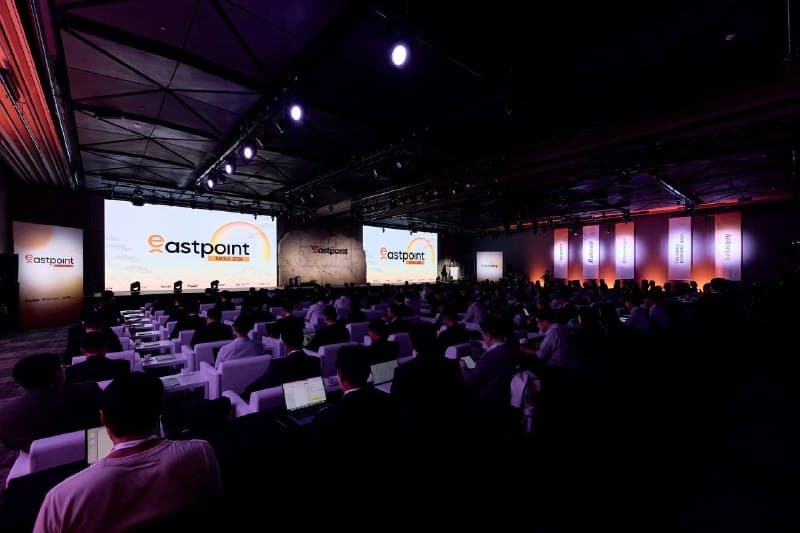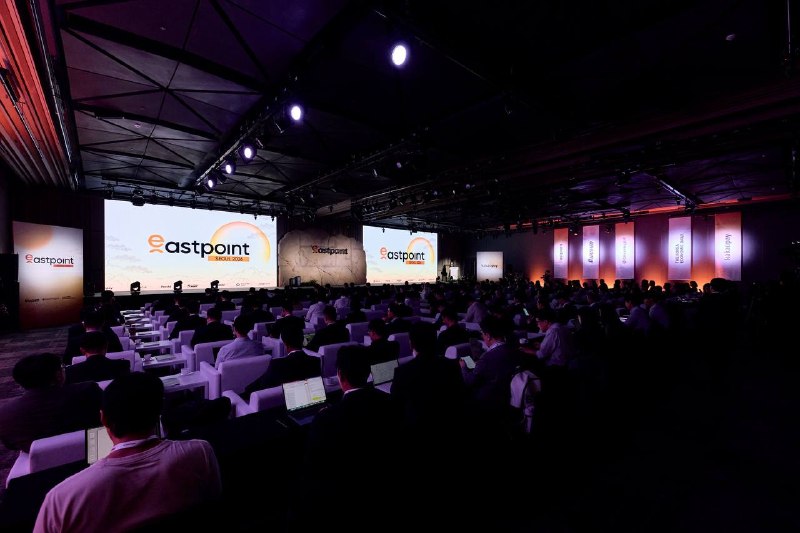
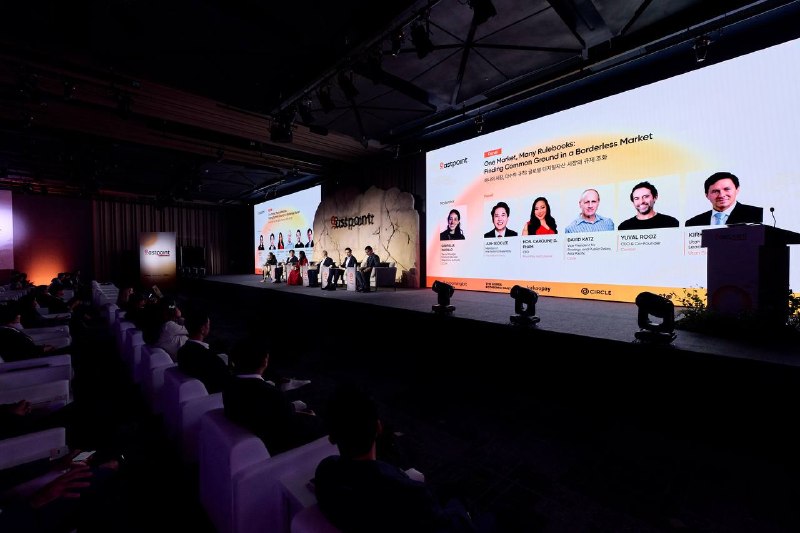
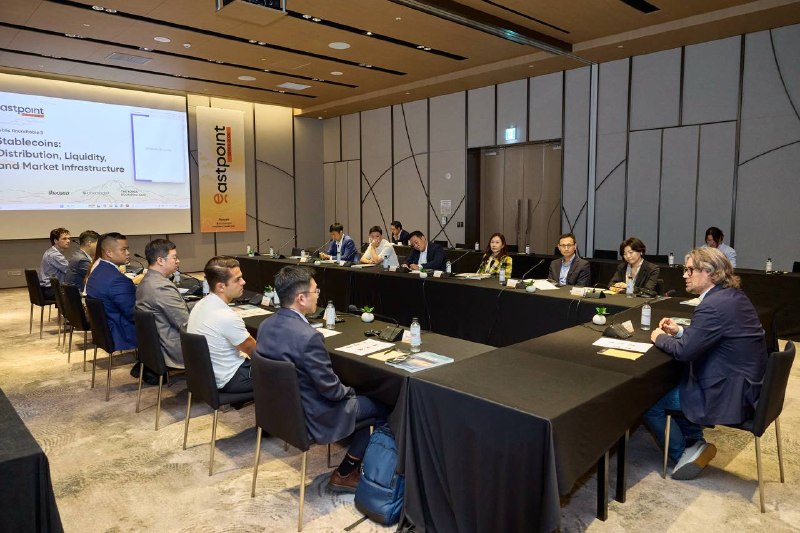
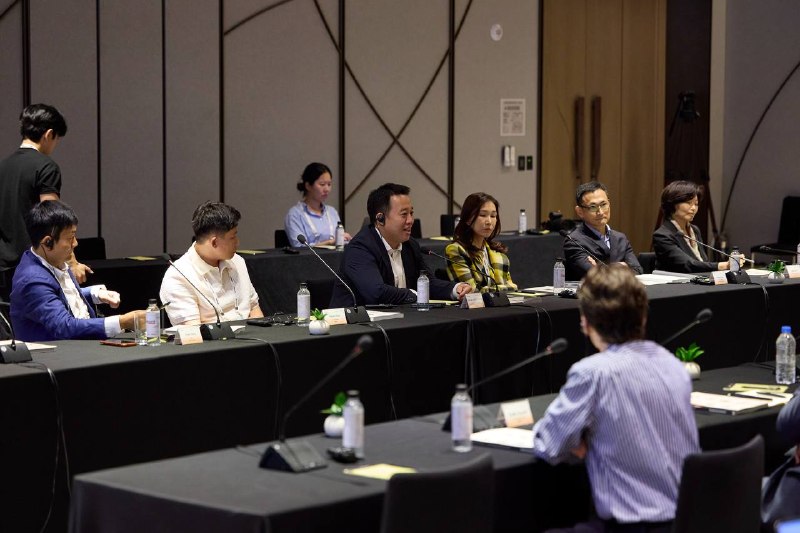
We have wrapped up the second EastPoint. On September 28, 600 people from about 270 institutions gathered at the Westin Parnas. But for those of us who organized it, I think what will stay with us longer than the numbers is who sat where. Who sat at which table, and which conversations carried on to the end.
EastPoint:Seoul 2026 | 이스트포인트 디지털자산 서밋이스트포인트:서울 2026 (9월 28일, 서울 파르나스 호텔) — 디지털자산, 스테이블코인, RWA 토큰화, AI 경제를 다루는 한국 대표 프라이빗 서밋. 해시드, 블루밍비트, 한국경제신문이 공동 주최합니다.EastPoint:Seoul 2026 · eastpoint.xyzOpen
Before creating EastPoint, Hashed co-hosted Korea Blockchain Week for seven years. Through that event, which grew into Asia’s largest public blockchain conference, we tried to introduce the possibilities of this industry to people when blockchain was still unfamiliar. But with each passing year, one question weighed more heavily on us. What is said on stage is released on video that evening and circulated in summaries the next day. We live in a time when anything you can hear as an audience member is more efficiently delivered online. What, then, should it mean to travel a long way to gather in one place?
After many discussions, the answer we found was the inspiration that comes from conversation. The internet has already taken over the work of conveying information. We felt that the value left in meeting offline lay in people with expertise and questions worthy of one another’s respect sitting face to face and testing their ideas.
So last year, we designed EastPoint from the start as a private, invitation-only conference. We also set one rule. Every attendee must be willing to give a talk, join a panel, or take part in at least one round table. We called this proof of contribution. Just as participating in blockchain consensus requires putting something at stake, whether computing power or holdings, entering EastPoint meant putting your own perspective at stake.
We were not certain this rule was right. Some people declined to attend because of it, and the wish to listen quietly deserves full respect, too. Throughout the preparations, we kept asking ourselves whether narrowing the door was the right choice. Still, we held to the rule because we felt that, as exceptions piled up, a place for conversation would turn back into a place for watching.
This year, we held 38 round tables in a single day. After this second event, I have a little more faith that the rule works to some extent. People who know they will soon have to offer their own views listen differently to others’ talks, too. The single premise that everyone contributes turned an audience into participants in a conversation. We set the rule, but it was the people who sat together at the tables who made it a culture.
The biggest change from the first event was the faces around the tables. Far more leaders of banks, securities firms, card companies, and asset managers joined us than last year. Just last year, the full-scale adoption of stablecoins and blockchain infrastructure across finance felt like a somewhat distant future. This year, I could feel through many conversations that it had become something everyone needed to treat as a core part of their business. If last year’s question was “When will it arrive?”, this year’s was closer to “In what order should we prepare?” When the questions change, the industry’s timetable moves with them.
A round table has no head seat. King Arthur’s Round Table is said to have been created with that meaning. After two events, I have come to understand these words a little differently. Having no head seat means everyone is on equal footing, but it also means no one can stand back. At a distance where you can see one another’s faces, words become more careful and, at the same time, more honest.
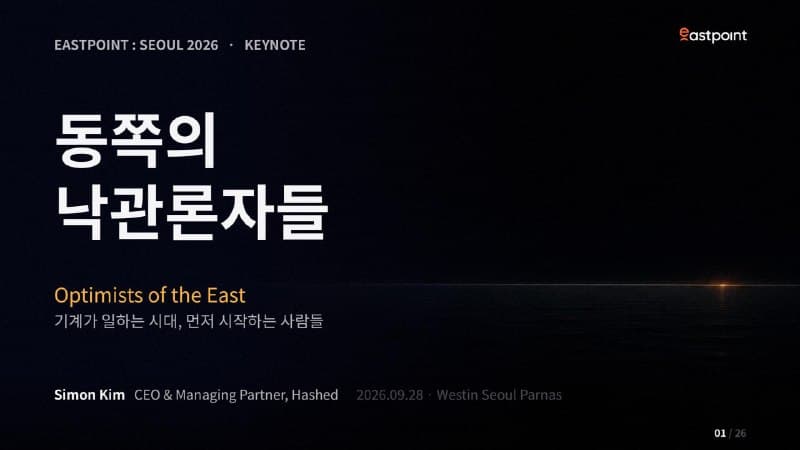
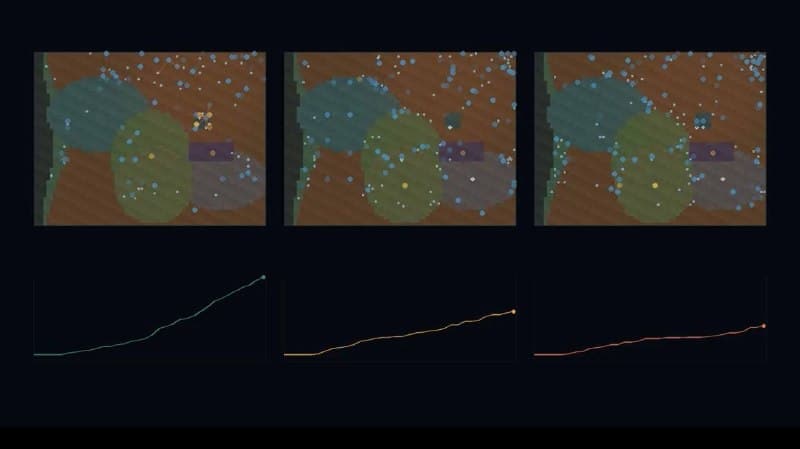
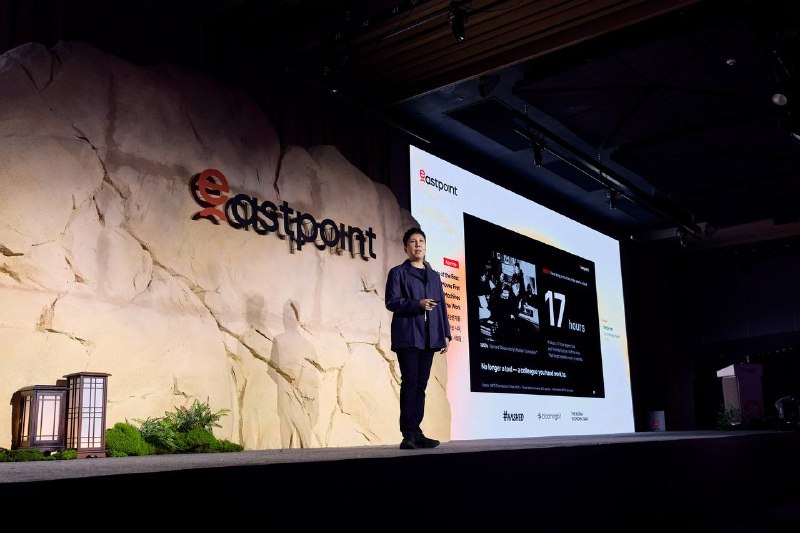
My keynote was titled 'The Optimists of the East.' I began by saying that what AI has made cheapest is not intelligence but being wrong. A misconception that once lasted months now ends in an experiment lasting a few hours. Mistakes appear on the books, but the cost of attempts never made appears in no ledger. So I wanted to define optimism in terms of the size of the sample rather than the strength of belief. People who try more and get more things wrong learn about reality faster. In a world where being wrong has become cheap, optimism is closer to a rational strategy than an inborn trait. I said that for Korea, which had grown used to finding the right answer quickly, the speed of being wrong could become a competitive advantage in an age without right answers.
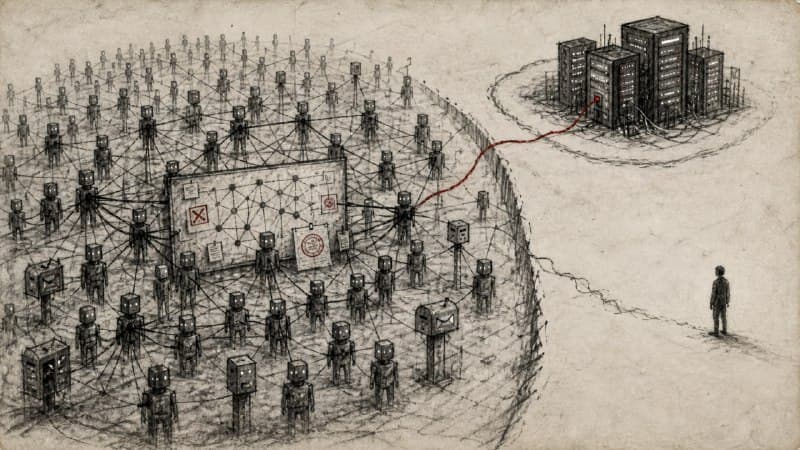
I added that as intelligence gets cheaper, trust becomes the most expensive thing. I think this is also why AI agents and stablecoins carried particular weight among this year’s five themes. The two stories point to the same place. Even the smartest AI still cannot open a bank account or buy a server costing five dollars a month on its own. Accounts, signatures, and service counters were all built with people in mind. Agents exchange thousands of transactions worth a few won each, second by second, without rest. For such beings, a payment network built around business days and minimum fees is too slow. A wallet that proves ownership with a single key and a programmable dollar speak the right language from the start. Agents, rather than people, are likely to drive a large increase in stablecoin transactions. For a long time, we blamed poor user experience for blockchain’s failure to reach mass adoption. Perhaps we had the wrong user in mind. I believe agents will be blockchain’s real users.
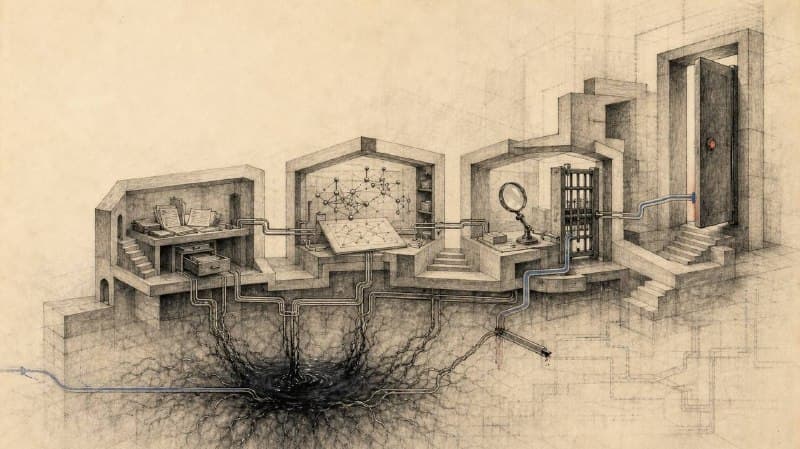
The remaining gap is identity. Many companies are already building payments, but no one has yet taken responsibility for proving whose side an agent is on. If agents from around the world were to receive their first identity and make their first payment in Seoul, Korea could become a country that helps write the rules. So I asked policymakers to put a date on “no.” The reasons for regulation remain on record, but companies that never came into being are recorded nowhere. Of course, there is still a long distance between that possibility and reality.
Looking back, the podium and the tables were working toward the same question. A round table is a place to try out ideas and be wrong at a lower cost than writing them into law. Good rules usually emerge from many such conversations over time. As more of the economy passes to agents, we will need places where people sit face to face and decide what to begin even more than before.
I picture EastPoint a few years from now. Proof of contribution applies to agents, too. At registration, agents prove whom they represent, what commitments they can make, and who is responsible if things go wrong. Agents settle payments among themselves, leaving people to decide what to begin and what not to do. If an agent bringing together the voices of many individual investors were to earn a seat at that table, people the event cannot reach today could also join the discussion.
An invitation-only event inevitably narrows the door. I often think of the small startups, regional financial institutions, and researchers whose names are not yet known who may be outside it. Next year, rather than making the tables bigger, we want to try adding more round tables. We are still learning, too.
Many people helped create this gathering. My thanks to Bloomingbit and The Korea Economic Daily, who prepared the event with us, the Hashed platform team for all their work, the speakers who came from abroad, and everyone who gave so much of their time to sit at the tables and share their thoughts.