The tools I use shape the way I think. The way I search determines the information I see. The AI I use determines the answers I receive. The moment I entrust my infrastructure to someone else, I become that infrastructure’s product.
After writing this sentence for the first time, I stared at it for a long while. The reason it felt uncomfortable was that I was no exception. We hand things over to whatever is convenient, then depend on what we handed over, and lose control once we become dependent. Most people have probably never even thought deeply about what it means to hand the infrastructure of their thinking to someone else.

In February 2025, a wave called “vibe coding,” which began with a single tweet from Andrej Karpathy, started creating a massive crack in that old habit.
Martin Casado, a partner at a16z, is an investor in the world’s largest CRM company, yet he is building and using his own CRM with AI instead of using the product of the very company he invested in. Someone investing money in Salesforce does not use Salesforce. When you think about what this means, it is a little frightening. Shopify CEO Tobi Lütke went a step further. He told every employee, “Don’t ask to hire more people unless you first prove that AI can’t do the work.”
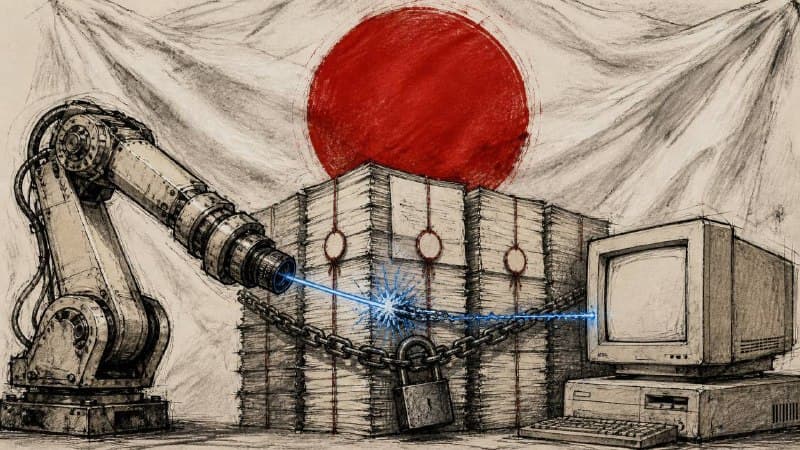
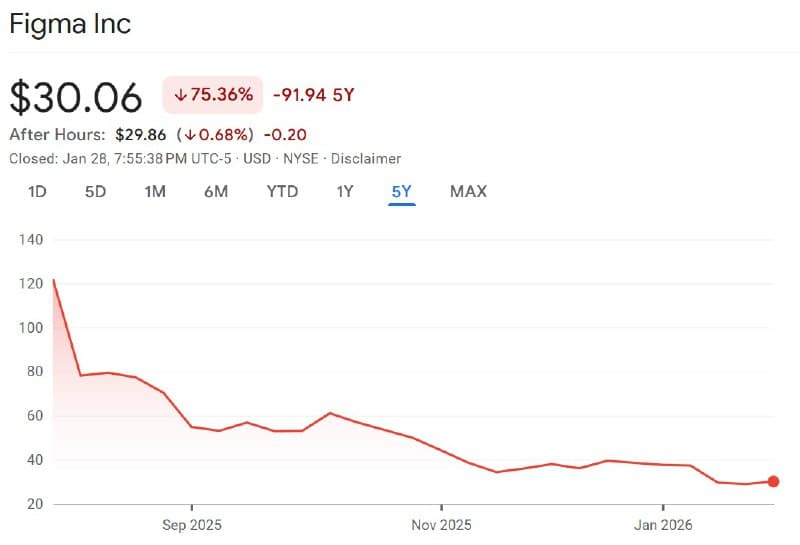
The market is reacting sensitively to signs of this change. SaaS company stocks are swinging sharply amid the fundamental sense of crisis AI has created. There may be many factors behind the decline in stock prices, but there is no doubt that the question “Is AI driving SaaS toward extinction?” is casting a shadow over the entire market.
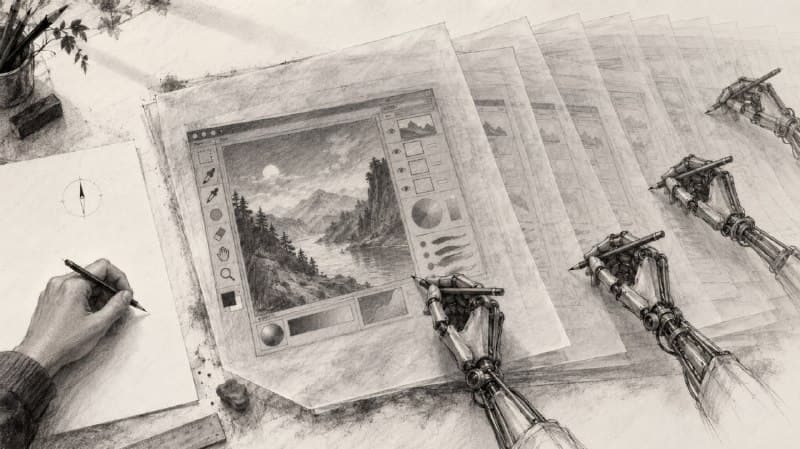
Let’s take a brief look at the landscape of what is happening now. A café owner who has never written a single line of code builds an ordering system suited to their own shop in one day. A solo freelancer cobbles together a work tool of their own that combines Notion, Slack, and Google Calendar over a weekend. A three-person startup asks AI to do what would once have required subscribing to millions of won worth of SaaS each month, and finishes it overnight. Solo developers like Pieter Levels are running several profitable services on their own with AI’s help, opening an era in which “a one-person billion-dollar company” is no longer a joke. These people are not developers in the traditional sense. They simply know what they need. We are entering an era in which anyone who can express a need in words can become a builder. The era when the ability to make tools belonged exclusively to a small minority is quietly, but irreversibly, coming to an end.
What vibe coding does is, essentially, decentralize the service layer. We subscribed to SaaS. We adapted the way we worked to tools made by others. We forced our round selves into square holes. Now we can decide the shape of the hole ourselves. This is not simply a trend. It is the return of an old impulse. Ever since the days when humans chipped stones into axes that fit their own hands, we have always been creatures who made our own tools. Industrialization took that ability away, and SaaS merely filled the gap.
And attempts are continuing to control the tools we make ourselves entirely on our own desks, rather than in someone else’s cloud. Vitalik Buterin has been experimenting with local LLMs while replacing Google services one by one with decentralized alternatives. His “d/acc” philosophy—defensive, decentralized, and democratic accelerationism—provides the ideological framework for this movement. Something he wrote on his blog gets to the heart of it: “not delegating trust to a third party.” A principle that began with money is spreading across data and computing as a whole.
The infrastructure needed to make this expansion possible is also taking shape in reality. Exo Labs ran the DeepSeek V3 671B model on eight M4 Pro Mac Minis. The total cost was about $5,000. That is one-fifth the price of a single H100 GPU. The gap between open-source and frontier models is narrowing dramatically. In early 2024, there was a gap of nearly 20 points between Llama 2 and GPT-4 on MMLU. When DeepSeek-R1 appeared in early 2025, that gap had narrowed to 1.5 points, and open-source models were actually ahead on math and coding benchmarks. The shift from “AI is in the cloud” to “AI is on my desk” is really happening.
But when you look more closely, uncomfortable questions remain without end.
If I put a Mac Mini on my desk and run a local model, have I really secured a world made with my own hands? To be cold about it, I hold only the last mile. Meta made the model, TSMC made the chips, and the entire internet made the data. I am merely clutching the end of a vast supply chain and fooling myself into calling it “mine.” As Tim Wu pointed out in The Cycle, no decentralization has lasted forever in history. Linux is a successful decentralized project, but AWS is making the most money on top of it. The companies that built platforms on top of the kernel, not the people who made it, took the spoils. Even when the protocol is open, value capture gathers at the center. Even if vibe coding dismantles SaaS, there is no guarantee that the models, chips, and clouds that make that dismantling possible will not become the next bottleneck.
At the same time, the very idea of ownership contains a burning problem. Only people with technical literacy, financial resources, and the time to spare can run local models. In the end, computing self-sovereignty is not a technological problem but a new class problem. A world where everyone can make their own tools has not arrived. The gap between those who can make them and those who still have no choice but to rely on others’ tools is widening in a new form. For decentralization to become liberation, that liberation cannot be an escape available only to a few.
It does not stop there. Who made the values of my AI agent? The moral base layer of the model I run locally was designed by some engineer in San Francisco and trained by a labeler in Nairobi. What I put on my agent is only wallpaper called taste. I did not build the wall itself. The foundation work is already finished, and I am closer to a tenant who moved in on top of it. When that agent writes my emails, assists my decisions, and influences the direction of my thoughts, its biases become mine without my realizing it. I may decide not to borrow tools, but what if the very materials that shaped those tools belong to someone else? Where does a controllable life begin? This is not a question about technology but a question about identity.
Beyond all of this, one final question awaits.
“How does a perfectly independent individual reconnect?”
At the extreme of decentralization lies isolation. A world filled with my tools, my models, my agents, and my infrastructure may be strong, but it is lonely. What we really want is probably independence for connection, not isolated independence. Not building walls to protect myself, but standing on my own ground and reaching out my hand. When each island is scattered across the sea, who builds the bridges between the islands? A community that shares code may be one hint, and a P2P network where individuals connect directly with one another may be another. But ultimately, this is not a question of protocols. It is a question of philosophy.
I believe it is right for the evolution of human civilization to struggle in this direction. Even knowing that decentralization can become centralized again, the fact that we are conscious of the cycle itself gives us a different starting point. Power is now moving toward builders, individuals, and people who know how to make their own tools. So that this shift does not become an escape reserved for the privileged. So that the world I make with my own hands does not become another name for isolation.
A life that does not borrow tools does not begin with making tools. It begins with standing alone before the question. So that my agent does not unknowingly represent someone else’s values. We must keep asking.
What am I really holding? Who laid the foundation for what I call “mine”? And after all this independence, with whom and how do I want to connect?