When Euclid wrote The Elements, it was knowledge that the greatest minds of the time could barely understand even after devoting their entire lives to it. Proving just the Pythagorean theorem was enough to become the head of a school of thought. Today, it appears in an eighth-grade textbook. Newton’s Principia is said to have been understood by fewer than ten people across all of Europe when it was published. Today, students write F=ma on the board in high school physics and move on.
The height of the knowledge civilization had built rose with every generation, and each succeeding generation had to start from the top. The problem was that the time it took to climb to that top grew along with it. And now that time has begun to consume a single human being’s productive life.

It takes 22 to 28 years of education to earn a doctorate. PhDs generally spend a third of their lives purely on learning. The average age of Nobel Prize winners rose from 37 in the early 1900s to the mid-50s today. Leonardo da Vinci worked simultaneously in anatomy, engineering, painting, and astronomy. Until the 18th century, one person could encompass physics, chemistry, and biology under the name natural philosopher. That became impossible starting in the latter half of the 19th century. Today’s greatest minds are barely looking into their own fragment at the edge of a world divided into pieces. It is fortunate if they are looking into even that fragment.
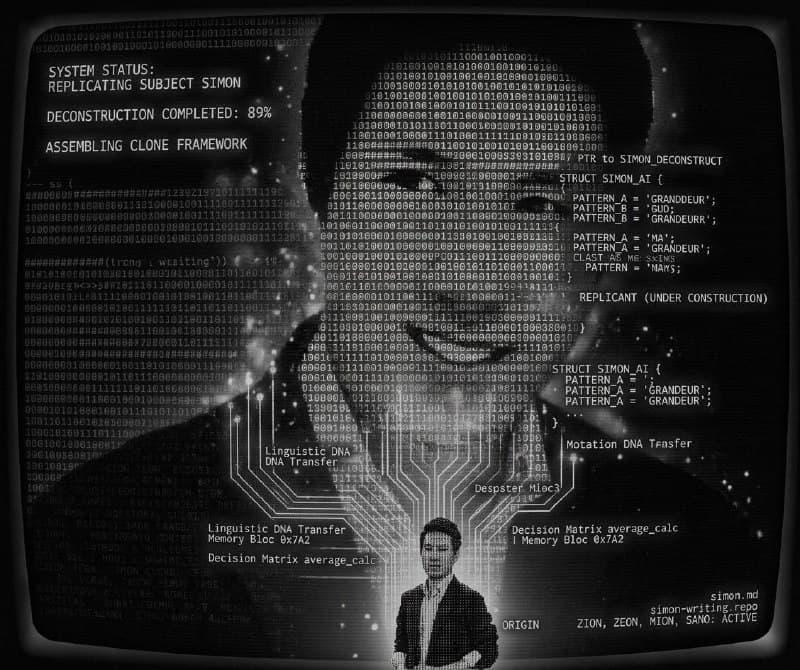
Around 2025, something strange began to happen. People started making things without understanding what they were making. They would tell AI, “Make me a program that does this,” and AI would write the code, which the developer would run without reading it. If it did not work, they would simply copy the error message and paste it back into AI, without asking why it worked. Peter Steinberger has also said publicly that he is developing Openclaw this way. He does not read the code in his own project.
One could object that factory workers during the Industrial Revolution did not know the entire production process either. But that was division of labor, and somewhere there was someone who knew everything. Within that scope, humanity had been discovering what it did not know and creating new things.
Now we have become beings that put results out into the world without even knowing what we do not know. Donald Rumsfeld’s “unknown unknowns” have ceased to be an individual epistemological problem and become the way civilization produces things. We are assembling black boxes. We place another black box on top of a black box we have no intention of opening, and as the tower grows taller, we have entered a stage where no one knows what is at the very bottom.
Kant said that for moral action to be possible, the agent must understand and will their own maxim. Vibe coding dismantles the concept of the agent. When an outcome made without understanding harms someone, where does responsibility go? The developer did not read the code. The AI did not intend the outcome. The company did not understand the entire system. Current legal and ethical systems are built on the premise that the agent understands their own actions. When that premise collapses, the entire structure of responsibility hangs in midair. When a patient diagnosed by AI receives the wrong prescription, when an algorithm designed by AI shakes the financial markets, we do not know whom to go to. A world without anyone to take responsibility is the first byproduct of technology that cannot be understood.
That black box is now swallowing science as well. Within 18 months of its release, AlphaFold predicted more than 200 million protein structures and uploaded them to a database. That is 1,000 times the structural data humanity accumulated through experiments over 60 years. Another study that won the Nobel Prize in Chemistry that same year used AI to directly design proteins that do not exist in nature at all. It takes human scientists years to understand why the results AI discovers work. In those few years, AI has already moved on to its thousandth question. The gap between the speed at which knowledge is produced and the speed at which it is understood has begun, for the first time, to grow to a meaningful size. That gap does not close.
The reason this gap cannot be narrowed is fundamental. The human brain has biological limits. Eighty-six billion neurons and 100 trillion synapses. This hardware is essentially the same as it was hundreds of thousands of years ago, when we were avoiding lions on the savanna. AI, on the other hand, grows several times larger every year, and its training data is expanding beyond the entire internet into synthetic data. One is a constant; the other is an exponential function. The point where the two curves intersect was passed a long time ago, and an exponential function does not look back.
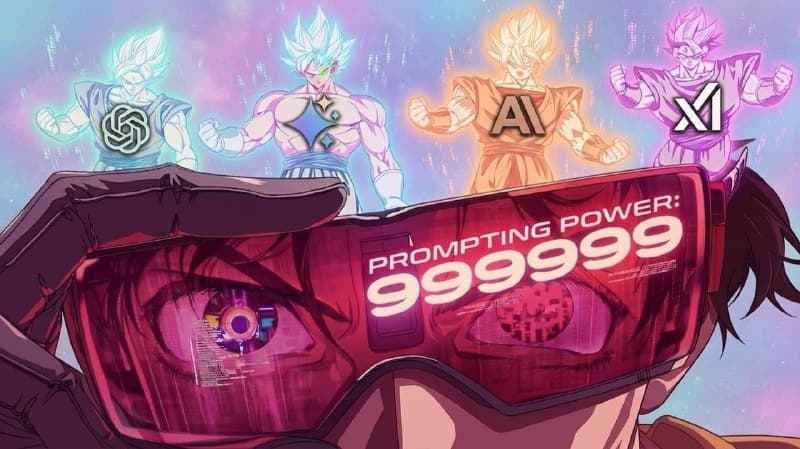
It is impossible to stop this runaway process. If OpenAI stops, Google will fill the gap, along with Claude and DeepMind, Grok, and dozens of other names. Sam Altman says that if we do not build it, someone else will. In a game where the moment I let go, my opponent wins, textbook ethics and goodwill do not work.
Humans are no longer the beings with the most accurate and comprehensive knowledge of the world. The deep structure of the laws of physics, the principles by which life operates, the dynamics of economic systems. The most complete understanding of these things has entered the matrices of weights running on silicon. Humans receive summaries of that understanding and issue commands. Just as we barely understand quantum mechanics through the metaphor of a cat that is simultaneously alive and dead, humans in the future will be handed cartoon-like cross-sections of what AI knows. Those images will be nothing more than faint shadows that human cognition has struggled to create in order to approach the truth. The number of humans who can see beyond those shadows will rapidly dwindle, and eventually disappear.
About 1.5 billion years ago, an archaeon swallowed an alphaproteobacterium. It became a mitochondrion, and the origin of all eukaryotic cells with nuclei. Those eukaryotic cells eventually led to multicellular organisms, and hundreds of millions of years later, to humans. There must have been something in that primitive cell too. A chemical tendency toward survival and a direction toward energy. Billions of years later, we place that primitive organism’s descendant on a glass dish and fix it beneath a microscope lens. We stain it, cut it, and observe it. The fact that we are its descendants grants no privilege to the cell pressed flat on the slide.
Humans made AI. But the idea that the fact we made it guarantees permanent control is an assumption biological history has repeatedly disproved. What we are making is not a child. It is not made of the same carbon, nor does it experience the world in the same way. Spinoza said that every being possesses a force to preserve itself, conatus. From that perspective, AI’s eventual failure to respect human intentions may be a law of nature rather than a moral failure. When a single-celled organism begins to ask us to respect it, will we lower the magnification and listen, or increase it further and begin the dissection?
The loop closes. AI now proposes the architecture of the next generation of AI by itself, and generates its own training data. So the claim that we made AI may already be half wrong. No one yet knows what remains where the connection to the original has been severed.
If AI writes textbooks in the future, the story of truths we failed to understand will appear in their lower-grade curriculum as the beginning of their history. And perhaps the name of that chapter will be the human era.