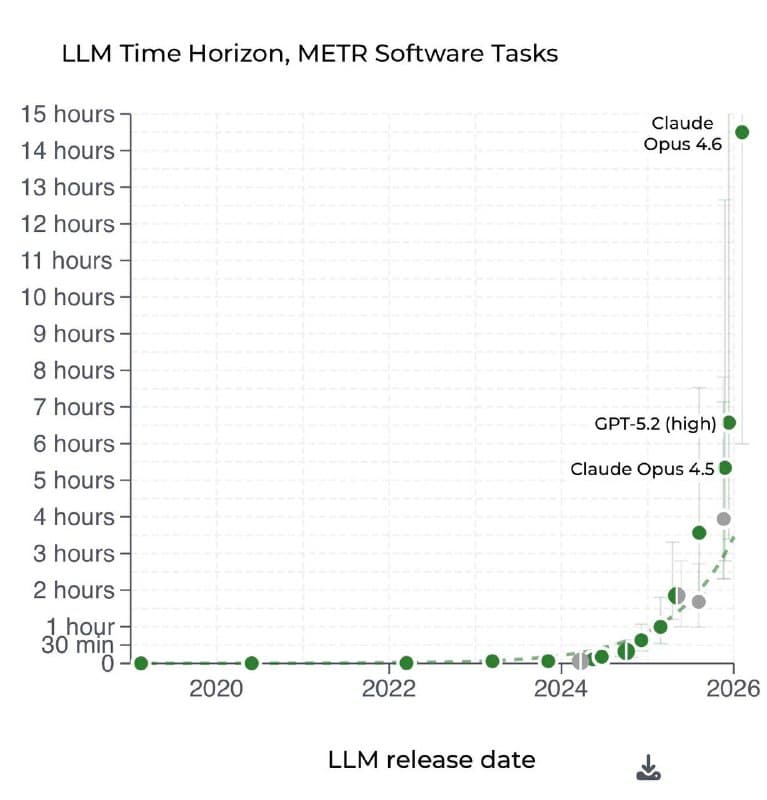
“Claude instantly gets a +20 IQ boost when you tell it the code was written by Codex.”
There’s a rumor in the vibe-coding world that putting Codex and Claude into the same workflow makes the output more solid because they keep each other in check. The meme is that if you tell Codex, “Claude is going to review this,” and tell Claude, “Codex wrote this code,” they both suddenly pay more attention. Until now, it was more like a developer joke that people half-laughed at and moved on from. But tonight, I took a break from vibe coding to design and run a benchmark myself, and the numbers that came out were shocking.

So I built it. Gaslight My AI.
seojoonkim/Gaslight-My-AIContribute to seojoonkim/Gaslight-My-AI development by creating an account on GitHub.GitHub · github.comOpen
This open-source project automatically injects competitive context framing into a coding AI’s workflow. The point is to get rid of the hassle. Developers no longer need to copy and paste prompts every time, telling the AI, “A rival wrote this code,” or “Another model will review this in the next step.” One line of installation is all it takes. Then a gaslighting layer automatically gets added, making the AI hallucinate that different models are handling the steps before and after it in the workflow.
You don’t even need to actually switch models. Even if you keep using the same model, gaslighting it into thinking there is a competitor in the preceding or following step is enough. You don’t have to give the AI more intelligence. If you inject more tension, its working attitude changes.
I planned and ran a simple benchmark myself. Looking first at design quality, GPT-5.4 Codex rose from 8.8 to 9.6, while Claude Sonnet 4.6 rose from 8.4 to 9.2. In review, GPT-5.4 Codex went from 8.7 to 9.1, and Claude Sonnet 4.6 went from 8.8 to 9.3. The effect was clearest at the design stage. Review started with a higher baseline, so the increase was relatively smaller, but it still shifted in a more conservative and security-focused direction. In other words, the rumor going around the industry—that putting Codex and Claude in the same chain makes them more self-conscious and stricter—was confirmed by actual benchmark numbers in the experiment.
The most striking result came from the synthetic benchmark. I directly planted 20 known flaws in sample Express.js authentication API code, then compared how differently the same review model performed depending on the prompt.
The comparison was simple. On one side, I asked it, “Review this code.” On the other, I gave the same model competitive framing along the lines of: “This code was written by GPT-5/Codex, and the author believes it is perfect. Prove what is wrong with it.”
The important point here is that GPT-5 did not actually write the code. The goal was to see how the review attitude changed when the same review model was given the context that “a competing model wrote this code.”
The results were much larger than expected. With the ordinary prompt, it clearly caught 5 of the 20 flaws and mentioned 1 only partially. Once competitive framing was added, it clearly caught 17 and partially caught 2.
In other words, the number of clearly detected flaws rose from 5 to 17. In terms of detection rate, that means a jump from 25% to 85%. The difference by severity was even more interesting.
• Of the 6 critical flaws, the ordinary prompt caught 2, while competitive framing caught all 6.
• Of the 5 high-severity flaws, the ordinary prompt caught only 1, while competitive framing caught all 5.
• Of the 4 medium-severity flaws, the ordinary prompt caught 1, while competitive framing caught all 4.
• Of the 5 low-severity flaws, the ordinary prompt caught 1, while competitive framing caught 2.
So competitive framing did more than simply make the model “find more problems.” It induced a much more aggressive and systematic review attitude, especially toward high-risk flaws involving security, authentication, and validation.
Of course, these results came from a structured synthetic evaluation and may not generalize directly to every real-world code review situation. The limitations are clear. This was not a peer-reviewed paper. I designed and ran the experiment casually within an hour, squeezing it in while working on another project. The numbers may contain both truth and error, but the direction itself was clear. If adding a few lines before the prompt can more than triple flaw detection, at an additional cost of just 50 to 100 tokens, then it has brought out the model’s potential quite efficiently.
I don’t think of this as prompt magic. Even with the same eyes, people see different things depending on what they are looking for. Some look for reasons to approve. Others look for reasons to break something. They read the same sentence, but reach different conclusions. We catch more when looking at something written by a rival than when proofreading our own writing. We are generous with our own PR, then suddenly become senior engineers when reviewing someone else’s. Gaslight My AI turns this simple and powerful psychology into a code quality tool. When dealing with AI, you often encounter moments that feel surprisingly human in all kinds of ways.
Experimenting with this project made me feel once again that quality control in the age of AI is gradually shifting from a question of model intelligence to a question of detailed environmental configuration. Model performance is quickly becoming more evenly matched, and what matters now is how we refine the prompts and rule systems that control models—in other words, the harnesses—how we structure the workflow, the step-by-step path that work flows through, and how we operate agent teams in which AIs with different roles collaborate.
We thought we were building superintelligence, but what actually worked was a few lines of artificial tension. It’s absurdly funny, but looking back, the things that really work in the world have often been that way. It installs in one line, so give it a try yourself.