As a gamer, I had long wanted to attend NDC (Nexon Developer Conference). I was invited to speak there on 'Games, AI Agents, and the Onchain Economy.' Walking around the venue, I felt that Nexon truly loves games.
The talk came down to three words. Games. Agents. Trust.

Games were the first industry to encounter nonhuman economic actors. They were bots. Auto-grinding, bot farms, gold farming. Bots logged in like people, repeated actions, collected rewards, and affected market prices. No one knew who owned them, and they bore no responsibility. It was like cars driving down the road without license plates. The problem was not automation. It was automation without identity or accountability.
So in the AI era, detection and blocking are not enough. We need to give agents identities and manage their permissions and responsibilities. Think of an airport. There are passports, visas, and security checks. We need to be able to identify agents, verify their permissions, and settle their transactions too.
LLMs and agents are different. ChatGPT and Claude are smart search boxes that answer questions well. Agents have memory, permissions, and tools, and they take action. They improve themselves through feedback loops and see tasks through to the end. If you think being good at using ChatGPT means you are good at using AI, you are mistaken. Unless you build a personal agent and experience an automation loop, you are not using even 1% of AI’s potential. The human role also shifts from playing directly to supervising: setting goals and checking results.
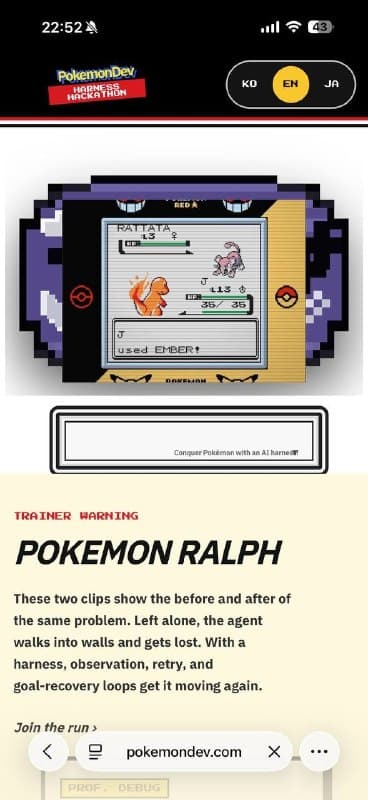
What makes games fun changes too. From controlling things directly to running multiple agents and designing strategies. At a Pokémon Red hackathon, participants selected from more than 100 applicants designed agents to play the game, then fixed them when they failed, over and over. Everyone said the same thing. Coaching the AI was more fun than playing themselves. When I play badly, I get stressed. When my agent fails, I can fix it and make it smarter. New forms of play open up, like assembling AI parties or running AI armies. AI could also take on healer or support roles that players avoid. The market could expand beyond trading characters and items to buying, selling, and renting agents themselves, and investing in their personalities and strategies.
MMORPGs were already real economies. Currency, auction houses, supply and sinks, inflation, trade, investment, guilds. Players were workers, merchants, and investors. Game companies have run these economies for decades. Agents will soon go beyond auto-grinding to become economic actors that decide when to trade, manage assets, and hire other agents.
This is where blockchain comes to play an important role. For agents to trade and collaborate, they need proof. Whose agent is this? What has it done? How trustworthy has it been? Agents need passports, reputations, and audit logs too. Blockchain becomes the ledger that manages their identities, transaction records, and trust. MCP, A2A, stablecoin payments, ERC-8004. These standards will form the foundation of the AI economy.
Before long, agents will profoundly change both the nature of games and the experience of playing them. By the end of next year, developed countries will likely be entering an era of one agent per person. Then people will ask: why can’t my AI agent log into this game?
The game industry will be the first to design and test the constitution of an AI agent society. Many changes and new opportunities lie ahead. Thank you to Nexon for inviting me to share part of that blueprint.