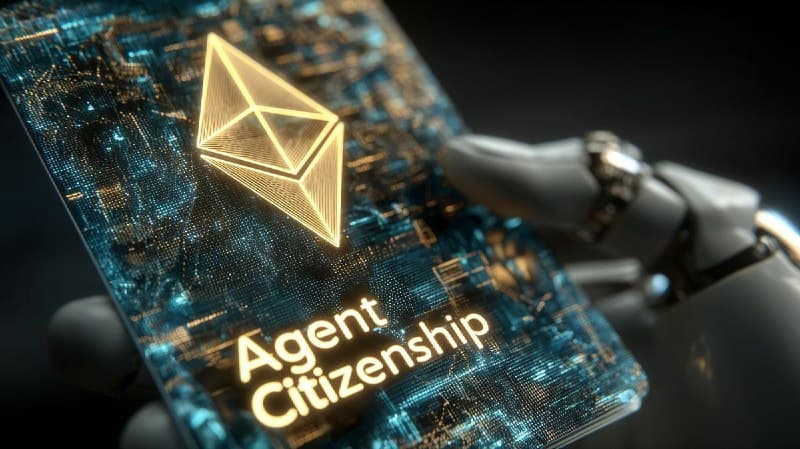
On February 19, 2026, the U.S. National Institute of Standards and Technology officially announced the "AI Agent Standardization Initiative." Tech media treated it as a half-day story, and most people forgot about it the next day. As I read the announcement, I thought back to the moment in 1994 when Tim Berners-Lee formalized the HTTP specification. People at the time did not really know what it was. No one thought a single document could change the structure of the world. It became the internet.
There is a forgotten loser in internet standards. The OSI model, designed by the ISO over seven years. Seven elaborate layers, an academically perfect architecture, and the support of European governments. TCP/IP, by contrast, was a "good enough" four-layer protocol. While OSI polished documents in committee meeting rooms, TCP/IP was bundled into BSD Unix for free and quietly spread through university server rooms. Perfect design lost. Working code won. And that victory came with an original sin. TCP/IP did not build "who sent it" into the design. At the time, it was a network used by a few hundred researchers who knew one another, so there was no need. We have been paying the price for that decision for 30 years. Spam, phishing, DDoS, identity theft. SSL, OAuth, and passkeys are all bandages added later. One omission in a standard grew into 30 years of security debt.

The AI agent ecosystem is at that moment right now. Anthropic's agents, OpenAI's agents, and agents from hundreds of startups are operating on their own islands. They cannot recognize one another, verify identities, or delegate permissions. Anthropic has already moved first with MCP, and by the time NIST made its announcement, the industry was already in the process of creating a de facto standard. It is unclear whether NIST is following or formalizing what is already there. And that uncertainty itself reveals the essence of this fight. One thing is clear. The identity standard war has already begun. And even now, the lines are being drawn.
Huawei's 5G strategy makes it clear how standards become weapons. Huawei pushed Polar Code into 3GPP's standard-setting meetings and made it the official standard for 5G control channels. By securing 15 to 20 percent of standard-essential patents, it ensured that even if the United States banned Huawei equipment, it could not stop the flow of royalties. Patents outlive equipment bans. China is preparing to play the same game with AI agents. It is targeting the chairmanship of ITU-T and expanding its geographic footprint by installing packaged AI stacks in developing countries. The United States chose voluntary guidelines from NIST, but we should not be fooled by the word "voluntary." The metric system was voluntary. TCP/IP was voluntary. No one ever forced anyone to write papers in English. There is a tipping point at which a voluntary standard becomes compulsory, and once that point is passed, the side that does not follow it is the one required to explain itself. Compulsion without force. That is the real power of a standard.
There is a reason this fight is about more than a technology war. The moment an agent identity standard touches blockchain infrastructure, it becomes financial infrastructure. If agents are to enter into contracts, execute payments, and move assets on their own, they need on-chain identities. An address like "simon.kim.agent" does not simply identify an agent. It creates a structure in which transactions signed by that agent are recorded on a blockchain, payments are settled, and fees flow. If an on-chain identity standard such as ERC-8004 or the .agent TLD wins, the chain behind it becomes the payment layer for the entire agent economy. If the internet moved information, agent standards move value.
Network effects are decisive here. Just as SWIFT became a financial hub by controlling the standard for payments between banks, the chain that controls the standard layer for agent transactions becomes the financial infrastructure of the next generation. The more agents grow toward one billion, the more exponentially the value of the payment rails they use in common grows. And this is where one thing leads to another. The more agents there are, the more valuable the standard becomes. The more valuable it becomes, the more agents gather around it. The more agents gather, the less likely competing standards are to survive. A world where winner-take-all operates much faster than it did on the internet. This standard war is not about getting a technological head start. It is about laying the foundation for network effects first.
Hannah Arendt used the idea of "the right to have rights." A refugee without a passport physically exists, but legally is a ghost. To exercise rights, you must first be inside a system of rights. Agent standards replicate this structure in the digital world. An agent outside the standard can run code. It can calculate and produce answers. But other agents do not trust it, it cannot get onto the payment rails, and it cannot participate in the economy. It exists, but cannot exercise anything. Who draws that boundary? The people who write the standards documents. That is why a standard is not a technical specification. It is the boundary that determines who is a citizen of this world.
I imagine 2030. "simon.kim.agent" starts moving before dawn. It reads the calendar, checks investment positions, reviews contract terms, and finishes preliminary negotiations with the other party's agent before the morning meeting. Dozens of transactions between agents are recorded on-chain throughout the process. Fees flow to the chain that controls the standard. Humans do not intervene. They retain audit rights. But what happens in a world where the standard has failed? NIST standards, the Google ecosystem, China's CAIP, and Ethereum's ERC-8004 cannot speak to one another. People move between them. A profession called an "agent interpreter" emerges, and in the age of automation, manual data transfer between agents becomes the fastest-growing industry. A strange paradox unfolds. Technology has advanced, but nothing is connected. More precisely, it is a world where the cost of connecting is so high that no one uses it.
Where is Korea now? It makes the world's best HBM chips, but still has to buy ARM licenses and EDA tools from American companies. Korea has already learned from semiconductors that no matter how high its technological capabilities, the side that controls the standard writes the rules. But that lesson is repeating itself at the AI agent layer. More importantly, this is not a question of technological sovereignty. If agent standards become financial infrastructure, a country without a voice in the standards discussion will be excluded from the competition to become a future financial hub from the very beginning. If you are on the receiving end of standards, no matter how excellent an agent you build, it can run only on payment rails designed by someone else. While paying expensive fees.
There is one more reason the timing of this announcement matters. When the internet emerged, we had decades to fix our mistakes. The agent economy will not move at that speed. The time it takes for agents to grow to 100 million or one billion could be less than 1 percent of the time it took for the internet. If a poorly designed identity standard, a design that omitted security, or a standard with the interests of a particular country or company embedded in its core spreads around the world at that speed, fixing it will be nearly impossible. Just as we have been unable to fix TCP/IP's original sin for 30 years. That is why this moment is not a time for tedious standardization work. It is the moment when we first unfold the map of the next generation's economy.
Tim Berners-Lee taught us the answer back in 1994. Whoever writes the standard first designs the rules of the next world. And now, that line is being drawn rapidly across the endless world map that AI agents will create. Simultaneously, from three continents and dozens of companies, each in a different direction. The map is already becoming a battlefield.