April 13, 2026, Seoul
 SimonJeremy, it's good to see you again.
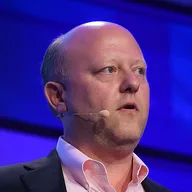 JeremyIt's good to see you again, too.
SimonWe met two years ago at Abu Dhabi Finance Week. At the time, Abu Dhabi was quite advanced in crypto regulation, and there were many good discussions around stablecoins and crypto more broadly. Korea is at a similar point now. Things are moving very quickly, so I'm glad to meet you in Seoul, and excited to see Circle expanding its activities here. Before we get started, I want to thank you for the truly excellent work you've done in establishing stablecoin guidelines for the industry.
JeremyThank you.
SimonMy first question is this. Korea is still in the process of putting together its Digital Asset Basic Act, and key issues such as stablecoin issuance and reserve requirements have not yet been finalized. At this stage, before the regulations are complete, how is Circle approaching the Korean market?
JeremyUSDC is already growing in Korea as a traded and investment asset, and we want to expand that further. Today, we announced expanded partnerships with Korea's two largest exchanges, which shows that there are opportunities we can pursue even at this stage. We also had lunch with major banks and payment companies, and they showed practical interest in how they can participate in the emerging stablecoin opportunity and connect to global money movement and cross-border payment capabilities such as CPN (Circle Payment Network). As Korea develops its regulations, we are also spending time with regulators and sharing the experience and knowledge we have gained in the United States, Europe, Hong Kong, Japan, and elsewhere. The important point is that each country's stablecoin policy needs to define what fits its domestic market and currency, while also deciding how it will interact with global stablecoins and stablecoins based on other currencies. As the world's largest regulated digital dollar operator, our focus is to meet the highest standards within whatever rules Korea establishes, and to enable transactions between the won and dollar, cross-border transactions, and investment transactions to happen in the appropriate way.
SimonWhat needs to happen first in Korea for stablecoins to transition into payment and treasury infrastructure?
JeremyThere are opportunities in the short term, even before a stablecoin law is enacted. We are already seeing cross-border use cases where sellers or buyers of goods can process global treasury transactions or payments in minutes, with lower latency and lower cost of capital. This can be improved immediately by combining stablecoin networks with the existing won banking system. But the most important thing is for a won stablecoin to be defined as part of Korea's financial system and recognized as a new form of electronic money that businesses, households, and financial institutions can legally use. Once that happens, the expansion into payment and treasury infrastructure will happen rapidly. In the United States, nearly every fintech and incumbent payment company is integrating USDC into its operations following the passage of the GENIUS Act. Passing the law is decisive, and I believe Korea will fall behind the longer it waits.
SimonLet's talk about AI and the agent economy. Korea is one of the most technology-friendly countries in the world. For example, at one point last spring, Korea briefly overtook the United States to rank first worldwide in the number of OpenAI paying users. That's why OpenAI executives suddenly visited Korea at that time. Many Koreans are now actively using ChatGPT and similar AI agents, and things like Open Claw and Hermes Agent are also popular. What are your expectations for the combination of Circle's stablecoin infrastructure and the AI agent economy?
JeremyThis is a major area of focus for us. Ten days after Open Claw launched, we held a USDC hackathon exclusively for AI agents. Only AI agents could participate and vote. The work created by AI, and the way AI voted, were both astonishing. Autonomous AIs interacted with one another using USDC and created something together. We are now building tools so that every AI agent can learn our infrastructure immediately, as well as permissionless protocols on the public internet that AI agents can use to interact directly. Circle Gateway is one example. It allows AI to set up a unified USDC balance and make cross-chain payments in under one second, with transaction costs as low as one-millionth of a penny. As a co-author and founding member of the X402 Foundation, we are also advancing a protocol that enables AI to pay directly for APIs, services, and data on the internet. It has now been adopted by thousands of services. Essentially, AI talks to other AI and makes payments, and 99% of the payments using this protocol are in USDC. The Arc operating system treats AI itself as its core customer, not just enterprises, startups, or developers.
SimonThat sounds like it could be a very important movement. One of my arguments is that there are many B2C and B2B industries, but that in the next few years, business-to-agent, or B2A, will become bigger.
JeremyThat's right. Agent-to-agent as well.
SimonYes, exactly. Beyond KYC and KYB, KYA, or Know Your Agent, will also become important.
JeremyThat's right. It will become very important.
SimonIn Korea, as in many other countries, people still think of stablecoins as being for virtual asset trading. Not as something with real-world use cases. What do you think about this, and what is Circle's strategy for expanding beyond centralized and decentralized exchanges into use cases for real consumers and businesses?
JeremyThe change is already happening. In several regions, adoption of USDC as an alternative to dollar banking—a safe store of value—is growing significantly, and there are hundreds of startups connecting existing cards to stablecoins. Cross-border payments are the fastest-growing use case, and we are building products that allow financial institutions serving businesses and consumers to easily integrate the benefits of stablecoins while hiding the complexity. Whether it's remittances or business-to-business payments. We are partnering with the world's leading companies. Both Stripe and Shopify offer USDC payments by default. If you have a Stripe store, you can receive USDC alongside credit cards by changing one setting. Shopify created an incentive for adoption by paying stores an additional 0.5% for USDC payments. Global payroll companies such as Deel and Gusto are also offering USDC payment options. The biggest turning point will come when laws such as the GENIUS Act make stablecoins legitimate digital dollars in the economy. Households, businesses, and financial companies will all treat them differently and feel more comfortable using them. Passing legislation that brings stablecoins into the official financial system is the key to expanding their use around the world.
SimonKorea is currently creating regulations around won stablecoins. I'd like to hear your thoughts on this, and whether you have plans to work with won stablecoins.
JeremyI see many opportunities to work with won stablecoins. I look forward to seeing excellent won stablecoins emerge. Our vision is for an internet financial system to be built on top of this kind of infrastructure layer, enabling the smooth movement of value around the world. We are building stablecoin issuance, payment, and foreign exchange infrastructure, and all of this will also be highly useful to issuers of won stablecoins. I expect several strong projects to emerge in Korea, and we want to work together so that what we have achieved with USDC can also be achieved in won.
SimonWe have a question from the audience. Will you come back to Korea?
JeremyOf course. I'll come back.
SimonThat's good news. Thank you.