At the front of the longest lines, the same illusion always takes hold. There must be something extraordinary at the other end. But what people really want is usually not a thing. The thing is closer to an excuse. What they want is the right to enter, the right to recognize, and something like permission to belong to that world.
That was what I saw in Hong Kong, too. People carried merch and shopping bags, but what they were actually taking home was closer to proof than to things. The feeling that “I was here,” “I can read this context,” “I recognize this world.” Consumption ends with an object, but proof leads to identity. A limited edition is no longer just a scarce product. It becomes a rite of passage, and a drop becomes not a sale but a process of admission. People go home carrying a sense of belonging more than shopping bags. More precisely, they carry the feeling that they had the right to belong to a particular world.


So this event felt more like a gateway than an expo. On the surface, it was a marketplace full of brand booths, performances, and merch, but objects were not the only things being exchanged. Taste, discernment, memes, context, and the unspoken signal that “I know this” all passed between people. A place that revealed not who had more money, but who could read the grammar of this world. It looked like a market, but was really a system of verification. It looked like an event, but was closer to a protocol.
The background matters, too. ComplexCon is a pop culture festival that began in LA. Its format brought streetwear, sneakers, music, celebrity culture, and the limited-edition economy circulating online into the physical world. But its character changed when it came to Hong Kong. This is not simply an expansion overseas. Through this event, Hong Kong is trying to prove itself as a hub for the circulation of culture, beyond its role as a financial hub. For a city to become a gateway, it needs more than an advertising slogan. It needs scenes of people actually flocking there. Not declarations, but time spent. Not messages, but the length of the lines. This event was a mechanism for producing those scenes.
The venue sat somewhere between a polished showcase and an overheated bazaar. More than 100 brand booths were packed together, and the flow of people felt less orderly than teeming. Some areas felt like curated exhibitions, others as crowded as flea markets. Designer toys, character IP, streetwear, sneakers, and drops arrived all at once, showing the heat of an expanding market. What interested me was that streetwear was no longer the only center. Character IP and designer toys were creating a stronger gravitational pull. Worlds were beginning to draw people in more than clothes, belonging more than products. Perhaps people today are not consuming things so much as moving into worlds. From an era when buying a pair of sneakers was a matter of style, to one where the characters you love and the stories you share become part of how you exist. Products grow thinner, while the worlds around them grow thicker.
Hong Kong made this feeling clearer. It has always been called a crossroads between East and West, but this time, translator felt more accurate. Once the format that began in LA arrived in Hong Kong, it stopped being an Asian version of an American event. The sheer presence of mainland Chinese audiences, the pull of Korean culture, and the tastes of Japan and Southeast Asia were translating one another in a single space. The atmosphere was quite clearly within Asia's own gravitational field. This was not a Western format landing in Asia, but Asian sensibilities occupying and rewriting a Western format. So the event was less “an event made in America has come to Hong Kong” and more “Asia is building a new system of admission through its own sensibilities.”
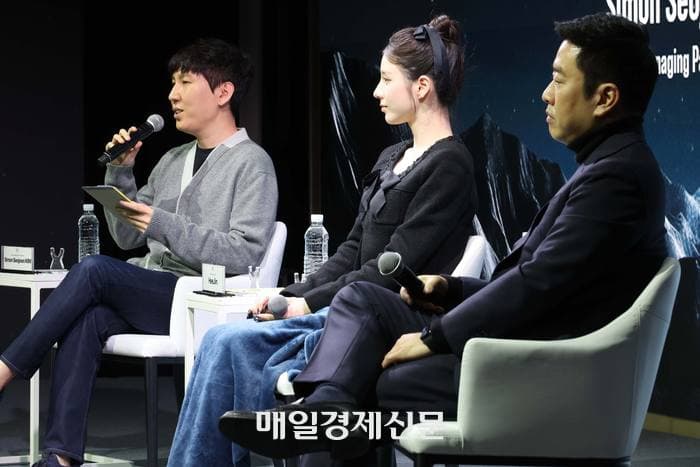
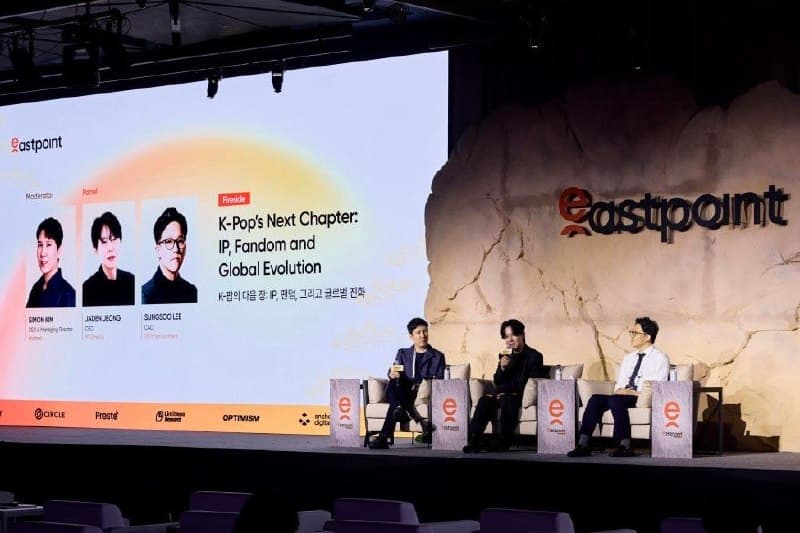
There, I joined a panel on Web3, K-pop, and the future of fan-participatory entertainment. Something became clearer to me through that conversation. K-pop's real innovation cannot be explained by its musical success alone. K-pop is becoming less a genre and more an operating system. A way of bringing fans and artists, online and offline, stories and merch, participation and belonging into a single structure. Defining it simply as an industry that makes good songs cannot explain why people do not leave after a song ends. Nor can it explain why even the gaps between comebacks work as part of the story, or why photocards, fan chants, and the rhythms of communities form a system beyond the music. What K-pop creates is not hit songs, but return. A structure that brings people back repeatedly, rather than making them like something once.
So fans are closer to residents than customers. It is not about consuming something you love, but living inside its world. If the future of a good brand lies not in gathering customers but in creating residents, K-pop has already been experimenting with that future for a long time. Here, Web3 looks less like an unrelated outside variable and more like a language that arrived late. Many people still understand Web3 through the grammar of prices and speculation, but in the grammar of fandom, the essential questions have always been different. Who came first? Who stayed longest? Who actually contributed? And how do we keep these relationships from disappearing? Fandoms have already been making rules voluntarily, verifying contributions, and working toward shared goals. The structure was there. It just did not have a name. What Web3 needs to do is not invent new behavior, but add a sturdier layer of memory to relationships that already exist.
What is interesting is that bringing AI into this could change the role of culture itself yet again. Until now, platforms have recommended things to suit our tastes, but AI may begin to interpret the relationships between people and worlds. Not so much what you bought, but what you kept returning to. Not so much what you said, but what you lingered over. If search engines indexed web pages, future AI might index the time people spend in cultures. At that point, recommendation becomes less an aid to consumption and more an interpretation of identity.
The role of blockchain changes along with it. It could move from a technology that records asset ownership to one that preserves traces of time spent and contributions made. What if the wallet of the future held more than coins, becoming a cultural passport that shows which worlds I have passed through? If it recorded which concert venues I had been to, which creators I had contributed to repeatedly, and which defining moments of a fandom I had lived through with others, blockchain would become not financial infrastructure but infrastructure for memory.
In the end, one thing came into view. The moment culture turns itself into infrastructure. The cultural industries of the past relied on bigger stars, bigger stages, and bigger noise. Today, strength does not belong to those who shout louder. It belongs to those who make people want to stay longer. Those who create residents rather than gather customers, who design gravity rather than buy traffic. This event was where that transition was happening. It looked like a festival, but it was a testing ground. It looked like a market, but it was a preview.
Of course, not everything was finished. It was crowded, excessive, and unevenly designed for something that presented itself as an international event. Even so, the outline of the next era was visible in its unfinished state. Not the order of a completed empire, but the beta version of an operating system just beginning to take shape. At its center, increasingly clearly, was K-pop. A culture that began with songs but grew beyond genre. A system that goes beyond content to design relationships, turning fans from consumers into residents.
What unfolded before me was not a single event, but a scene showing how tickets to a world are made. What, then, will people gather to buy in the future? Things, content, or, in the end, tickets to a world that can explain who they are?