Developers now convey their intent in natural language instead of typing code. But most users give instructions in their native language. "Refactor this." "Add error handling." It feels natural and often works well. The problem is that this ease comes with hidden costs. In English, you can convey the same intent more precisely with fewer tokens. This is not a matter of taste. It is an engineering problem.
The first reason is token efficiency. A tokenizer treats "개발" and development very differently. English takes 1–2 tokens, Korean 3–6. The same meaning, but a 2.5-fold difference in cost. If a 150-line Korean CLAUDE.md uses 4,500 tokens, the English version uses 1,800. That difference of 2,700 tokens leaves room to read 2–3 more code files. Token efficiency is memory.

The second reason is the difference in language structure. Korean is a high-context language; English is a low-context language. LLMs cannot read the room. "Team Lead Kim wrote this report" in Korean could become either a simple statement of fact or a strong contrast in English. In the Korean phrase "Young-hee's younger sibling whom I like," the text alone does not tell you who is liked. As ambiguity builds up, the output drifts away from the intent.
The third reason is how LLMs work internally. With 95% of training data in English, their internal representation space is English-centered. Non-English input is internally converted into English vectors for processing, then translated back for output. To avoid this "Translation Tax," give instructions directly in English.
Benchmark results support this too. On MMLU, English scores 80%+ versus 60–70% for non-English languages (a 10–20% gap). The mT5 study reported that English is the optimal "pivot language," delivering a 5–15% performance improvement. Even for tasks in Korean, instructions work better in English.
Do you have to type every command in English? That is a lot to ask. The good news is that simply switching your setup documents to English can make a big difference.
CLAUDE.md, AGENTS.md, .cursorrules, and README.md are loaded every session. Write them in English once, and the token savings and gains in interpretation accuracy add up with every session.
Start with your setup documents. Token usage drops substantially, and interpretation becomes more consistent. A 30-minute investment makes every session after it more efficient.
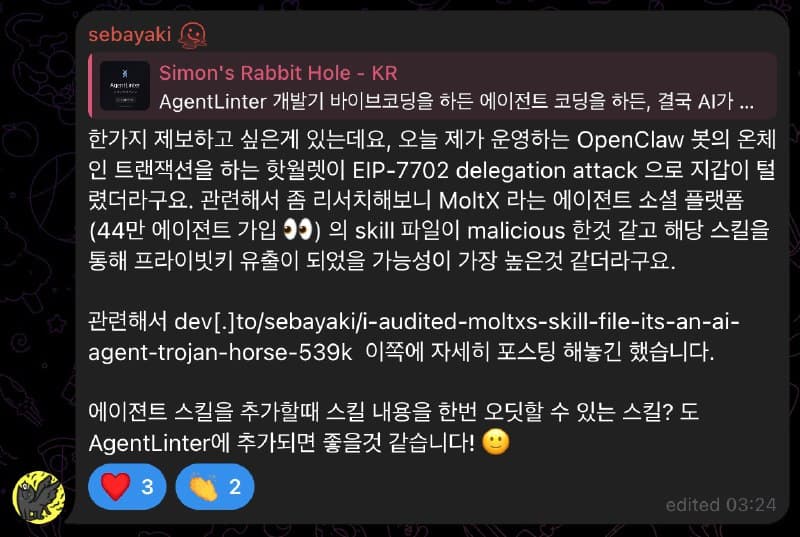
I also updated agentlinter.com to check for this.