Voices
Mark Zuckerberg and Alexandr Wang
Muse Wonder and the $100B AI Bet
Published · Cheeky Pint
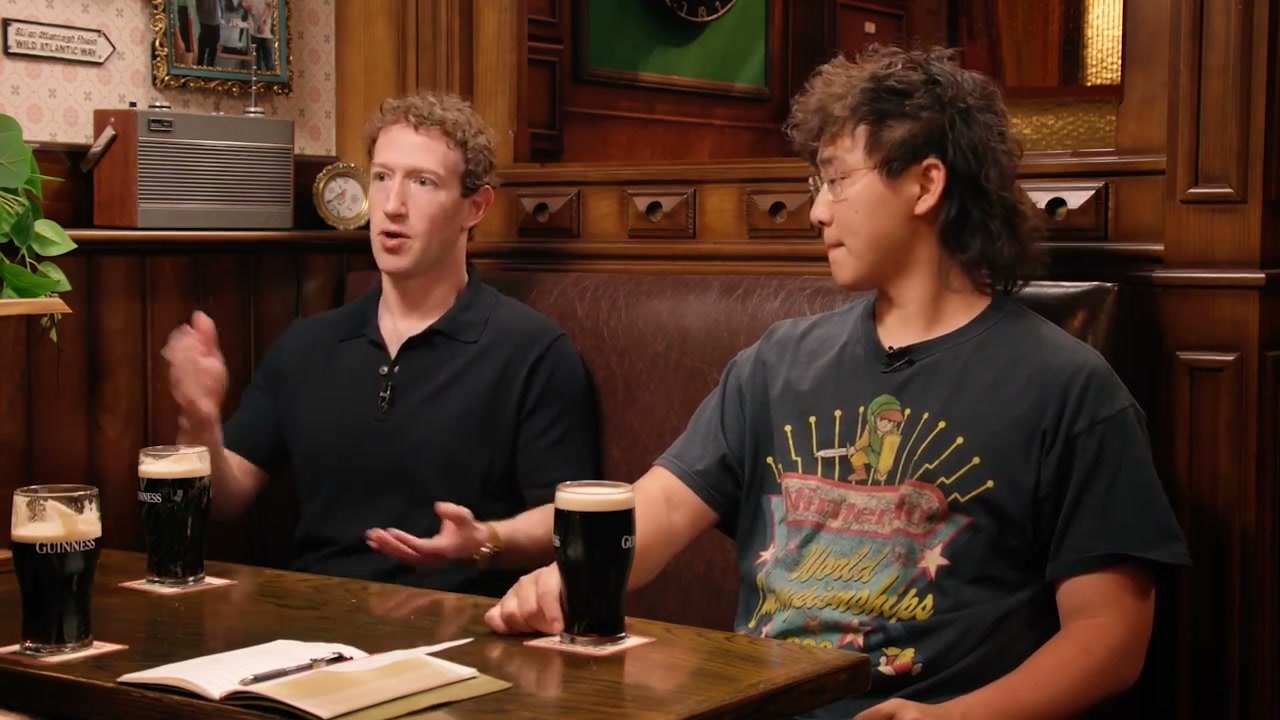
Mark Zuckerberg, Alexandr Wang, and John Collison discuss how Muse and Muse Wonder could change personal agents, products, and commerce, as well as Meta’s large-scale investment and a market where multiple AI models coexist.
- Runtime
- 2:14:31
- Format
- 12 CHAPTERS
- Full transcript
- 667 TURNS
CARROT CAVE INSIGHTS
- Once AI can remember a user’s context and be trusted to finish tasks, product competition shifts from adding features to building behavior people can rely on.
- When agents handle purchases, companies will need more than advertising that captures attention. They will also need product information and transaction systems that agents can compare and use.
- In an environment where customers can easily switch between models, top performance alone will not be enough to keep them. Providers that balance task-specific performance, price, and reliability will have an advantage.
- When AI development requires major upfront spending, cash from existing businesses can keep experiments going. Those experiments can then create a feedback loop by increasing profits in the established businesses.
- As AI begins handling tasks without opening an app, the battle for users will move from the smartphone screen to devices that see and hear daily life, along with the agents inside them.
Interview Details, Sources and Method
- Original title: Muse Wonder: Zuckerberg and Wang’s $100B AI
- Guests: Meta CEO Mark Zuckerberg and Meta Chief AI Officer Alexandr Wang
- Host: Stripe cofounder John Collison
- Published: Cheeky Pint, October 12, 2026
- Method: All 667 speaker turns of the official Cheeky Pint transcript, timed to the official video, with twelve chapter summaries and 23 highlighted key sentences
Full Conversation
Loading the conversation…
Muse’s breakout use cases
00:00:00 ↗Muse writes and improves the code needed for combat sports coaching behind the scenes. To build personal agents like this, Meta is focusing on the ability to understand not only text, but also video and audio.
Why the model is the product
00:07:28 ↗The difference between AI products comes less from their appearance than from how the model behaves and speaks. Teaching features and personality to the model is now part of building the product itself.
Meet Muse Wonder
00:14:35 ↗Meta says Muse Wonder can compete with the best models available. It is designed to remember more over time and complete complex tasks from start to finish, with a focus on personal and workplace agents.
How frontier models are actually built
00:24:56 ↗Strong models are built by evaluating them against real-world uses, not just external benchmark scores. Developers must expand the data and computing used for pretraining while refining the tasks and methods used in reinforcement learning.
Betting $100B
00:48:26 ↗Developing cutting-edge AI is a long-term effort that requires betting huge sums before the results are clear. Meta believes it needs its own superintelligence and the facilities to support it if it wants to build the products of the future itself.
Agentic commerce
01:07:21 ↗Agents can take the hassle out of buying things and shop on a person’s behalf based on their individual needs. This will not just make existing purchases easier. It could create new demand and expand the commerce market.
OpenRouter
01:19:34 ↗A sponsor message read by John Collison. OpenRouter, which Stripe has agreed to acquire, connects many AI models through one API and routes around outages.
Beyond the smartphone
01:20:06 ↗AI is moving beyond delivering information toward taking action, receiving instructions by voice and showing results through vision. Smart glasses and home devices will become new ways to use these systems.
Funding
01:27:00 ↗Meta plans to fund its AI investments through Muse subscriptions, commerce, and enterprise services. It believes that even modestly increasing growth in its existing core businesses with AI could provide much of the money it needs.
Why AI won’t be winner-take-all
01:34:06 ↗AI models will advance for different kinds of work, while distillation can help later entrants catch up with leaders. Companies and developers also have reasons to favor a world where many models coexist instead of one company controlling the market.
Meta Superintelligence Labs (MSL)
01:40:46 ↗Meta Superintelligence Labs began by recruiting exceptional talent and shifting the company toward an AI-first approach. Its leader needs sound judgment, flexibility, and the ability to work directly with the technology.
Working for Mark Zuckerberg
02:08:11 ↗When Mark Zuckerberg becomes convinced by new information, he can change course quickly and decisively. Meta is willing to invest heavily in changes that have not yet appeared in its results, showing its belief in AI through action rather than words.